We’ve been there a million times. There’s an open position within your organization and the department director asked you, their trusted HR partner, to identify some internal candidates who have excellent leadership skills. The next day the CEO was lamenting that she wished she had a better handle on who the top performers are within the organization within specific skill areas; the overall score just isn’t meaningful enough for certain types of decision making. Additionally, just about every day during the last appraisal cycle, you heard complaints that the whole process just didn’t feel as meaningful as it could have felt.
Where do you begin?
The vast majority of organizations continue to rely on numerical ratings for their performance reviews. There are a lot of reasons why. But when it comes down to it, how is a manager really supposed to know if an employee is a relatively stronger performer? How do we know if the competencies are meaningful to employees as they strive to improve their performance? The answer is simple. Organizations need to be able to easily manage competency level descriptions for their employees. These simple descriptions remove some of the subjectivity from the appraisal process. By making the review more objective managers and employees have a better experience and it also plays a role in protecting the organization.
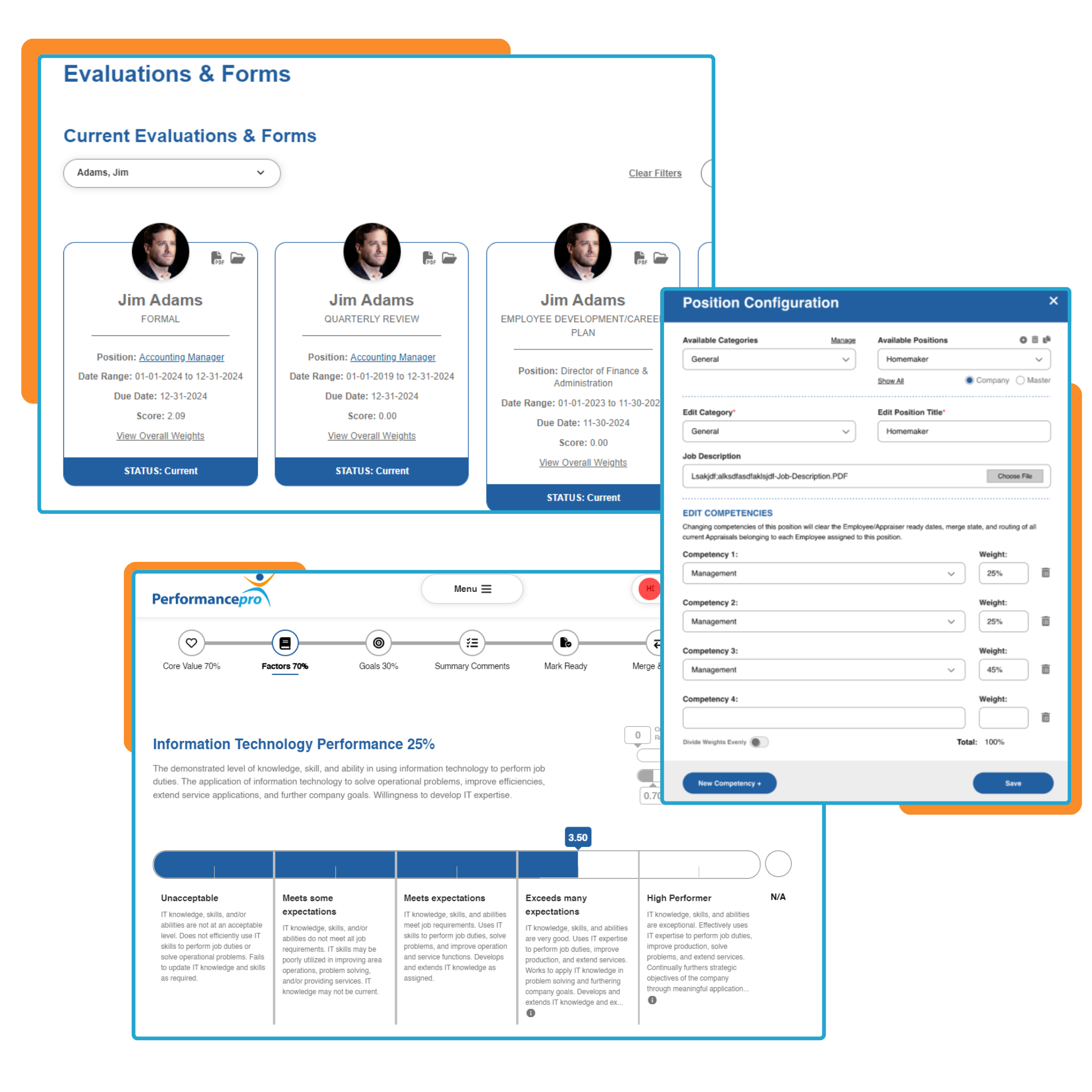
Every competency (or factor, if you use that verbiage) should have a definition of the competency as well as a brief description of what each competency level looks like. Here’s an example.
Each level is spelled out clearly so a manager has an immediate point of reference for how to evaluate an employee. This helps in 3 different ways.
1) These levels take some burden off of the managers. Managers no longer need to guess what a “4” looks like. The description is right there for him or her. The clarity provided by the competency level descriptions makes it significantly easier for him or her to move through the appraisal process quickly and easily. That keeps managers happy and keeping your managers happy is half the battle.
2) The levels provide clarity to employees around what is expected of them. At any time during the year an employee can come into their performance appraisal and see the specific metrics they will be expected to hit. These rating levels can be populated with really specific deliverables such as sales standards or they can have the “softer” metrics. Either way, it is a perfect way to keep employees on target all year round.
3) When it comes time for the manager and employee to sit knee-to-knee for the appraisal this alleviates surprises. There is a decreased likelihood that the employee will be surprised at not knowing an aspect of their competency. There is a decreased likelihood that the manager will be way off base when giving a score. And there is an increased likelihood that both the manager and employee will smile and nod as they both say, “that score seems about right.”
Now, the best part. How do our beloved administrative users benefit from competency level descriptions? Let me count the ways…
1) Succession planning can be much easier with level descriptions. How can you know who is ready to take on new responsibilities if employees aren’t being appraised on the same standard? Having one standard gives you the data to help your managers make sound business decisions. You can use this data to help with the requests from your directors and CEO.
2) What skills do we need to improve at our company? How will we know without data? Use the competency level descriptions carefully. Perhaps you want to break “communication” into a few different components such as listening, writing, speaking to find out exactly where weaknesses hide and then bring in specific training to address those needs. Recognizing weaknesses and doing something about it is how businesses move forward.
3) Are there managers who seem to help employees grow certain skills better than others? You can track that type of progress within Performance Pro if managers appraise their employees based on the same standard. When you do find a manager who can grow people find out what they do and model it in other areas of the company.
4) Pulling as much subjectivity out of the appraisal process helps protect the organization. When everybody is treated equally during the appraisal process a company can rest assured they are on safe legal ground. Leaders of every type want to protect their organizations.
These level descriptions seem like a brilliant idea but who has time to create all of them? Well, we do! One of the biggest reasons over 1,000 organizations use Performance Pro is because there is more pre-built content in it than nearly any other application. That pre-built content includes competency level descriptions for nearly 150 competencies. That’s a lot or writing we just saved you! You can thank us later. Feel free to customize ours or build your own from scratch as you like. If you do decide to build from scratch, you can quickly cascade your content to the employees that you choose.
Competency level descriptions seem so simple, but you can get a lot of bang for your buck with them. Give them a whirl.
« Return to "Solutions" Go to main navigation